Catholic AI & Human Dignity
Evaluating AI systems so that technology remains a servant of the human person Guided by Thomistic anthropology and Magnifica Humanitas.
Artificial intelligence is increasingly used in education, healthcare, pastoral work, and daily communication. Before adopting or recommending any AI system, Catholic institutions need a clear way to ask: Does this system respect the human person?
The Hylomorphic Audit Checklist v2.7 is a practical discernment tool grounded in Thomistic anthropology and the vision of Magnifica Humanitas. It helps evaluate AI systems as human-made artifacts, not as persons or moral agents, and checks whether they support human dignity, responsibility, and the common good.
Languages available in the tool: English · Italiano · Español · 日本語. This tool is offered as a prototype for careful institutional use. It supports discernment; it does not replace the Magisterium or local ecclesiastical authority.
Why it matters now
AI Agents, Power, and the Protection of Human Dignity
Artificial intelligence is no longer only a passive tool for search or drafting text. Increasingly, AI agents can plan steps, call other systems, write and execute code, manage workflows, and act across digital environments with limited human supervision. As these systems gain practical autonomy—even while remaining technical artifacts in principle—the risk grows that human judgment, responsibility, and dignity are sidelined.
Without clear governance, several pressures intensify:
- Substitution of judgment — machines used to decide outcomes that belong to human conscience and accountability
- Anthropomorphic confusion — language that treats AI as if it were a person, moral agent, or bearer of rights
- Opaque action chains — agentic systems whose intermediate steps are hard to audit or interrupt
- Unequal access and control — powerful capabilities concentrated in a few hands, or unavailable to those most in need
- False promises of transcendence — narratives that treat present humanity as incomplete and technology as salvation
Catholic teaching insists that every human person has intrinsic dignity—not because of efficiency or data profile, but because the person is created in the image of God. AI may assist human work; it must not replace moral responsibility, weaken truthfulness, or redefine the human person as an obsolete “version 1.0.”
This page offers a practical response: the Hylomorphic Audit Checklist, a prototype instrument for evaluating AI systems in light of human dignity, responsible oversight, and the common good.
Hylomorphic Audit Checklist v2.7
A Catholic prototype tool to check whether AI systems respect human dignity. It treats AI as a human-made artifact, not a person or moral agent.
| Level | Focus |
|---|---|
| 1 |
Ontological classification — what the system is |
| 2 |
Human faculties and relationships — oversight, judgment, encounter |
| 3 |
Ethical and societal alignment — access, liability, Red Lines |
| Virtues |
Faith, Hope, Charity |
This instrument supports discernment. It does not replace the Magisterium or local ecclesiastical authority. Scoring is a provisional calibration for critique and pilot use.
Paper overview
Magnifica Humanitas in Practice: A Thomistic Framework for Catholic AI Governance Neil Day · June 2026
This paper proposes a concrete Catholic framework for AI governance in response to Pope Leo XIV’s encyclical Magnifica Humanitas. Technical and procedural standards are necessary, but incomplete without a clear account of the human person and of what an AI system is.
Core claim
AI systems are human-made artifacts with accidental form. They are not persons, do not possess a rational soul, and cannot bear moral agency or legal personhood. Governance must keep AI subordinate to human judgment and ordered to the common good.
Two operational contributions
- Catholic AI Standards Working Group (CASWG) — a proposed collaborative structure for shared criteria, pilots, and review
- Hylomorphic Audit Checklist — structured evaluation across ontology, relationships, societal ends, and theological virtues, with explicit Red Line safeguards
Red Line concerns
Attribution of personhood or moral status to AI; treating biological humanity as provisional; mind-uploading / “digital soul” claims; unconstrained autonomous replication; technological substitutes for Christian hope and human responsibility.
Status
A prototype governance rubric for scholarly critique and pilot use—explicitly subordinate to the Magisterium. Endorsed by Professor Tad Gonsalves (Sophia University, Tokyo). Related dialogue includes participation in the Builders AI Forum, Pontifical Gregorian University, Rome (5–6 November 2026).
Read or Download the full paper (PDF)
Figures
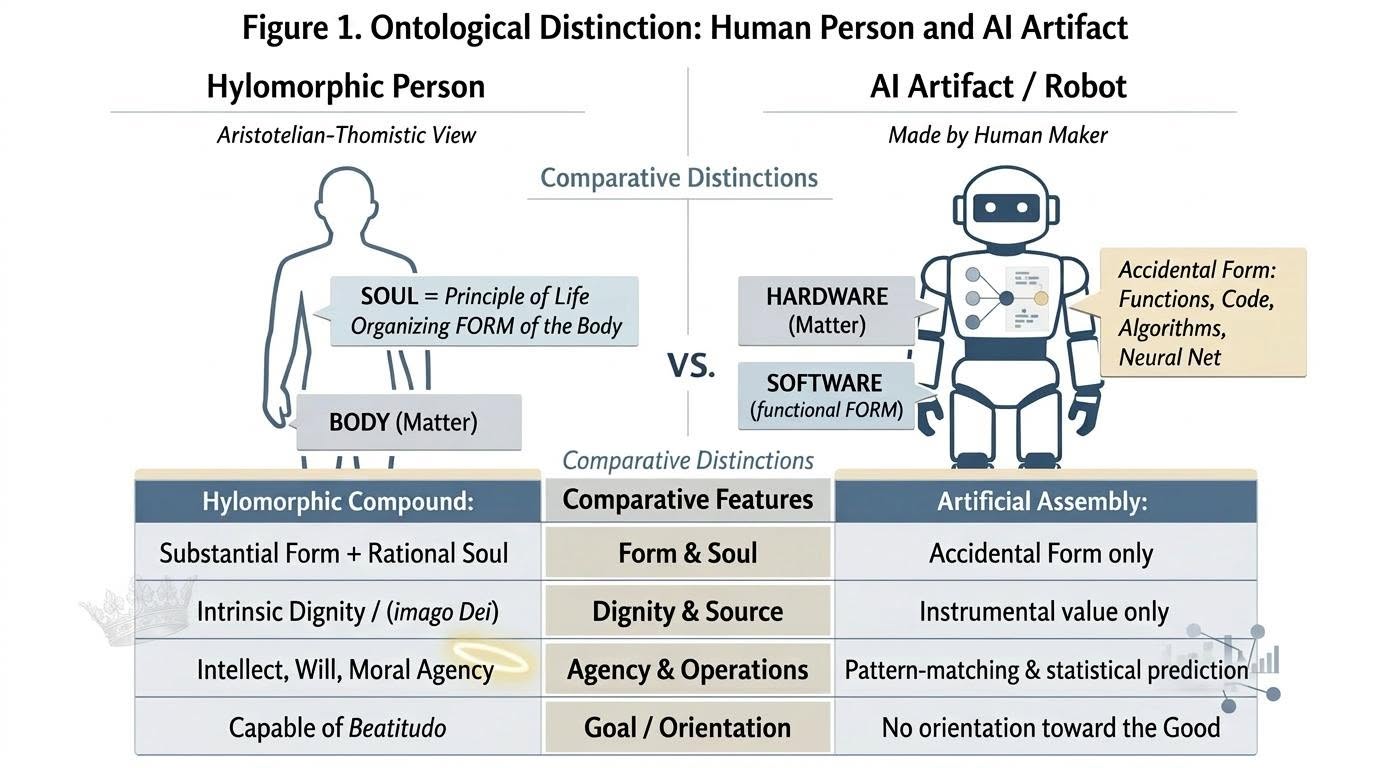
Figure 1 Person and artifact
The human person (body–soul unity, moral agency) is distinguished from AI as a human-made tool. Governance begins with this ontological boundary.
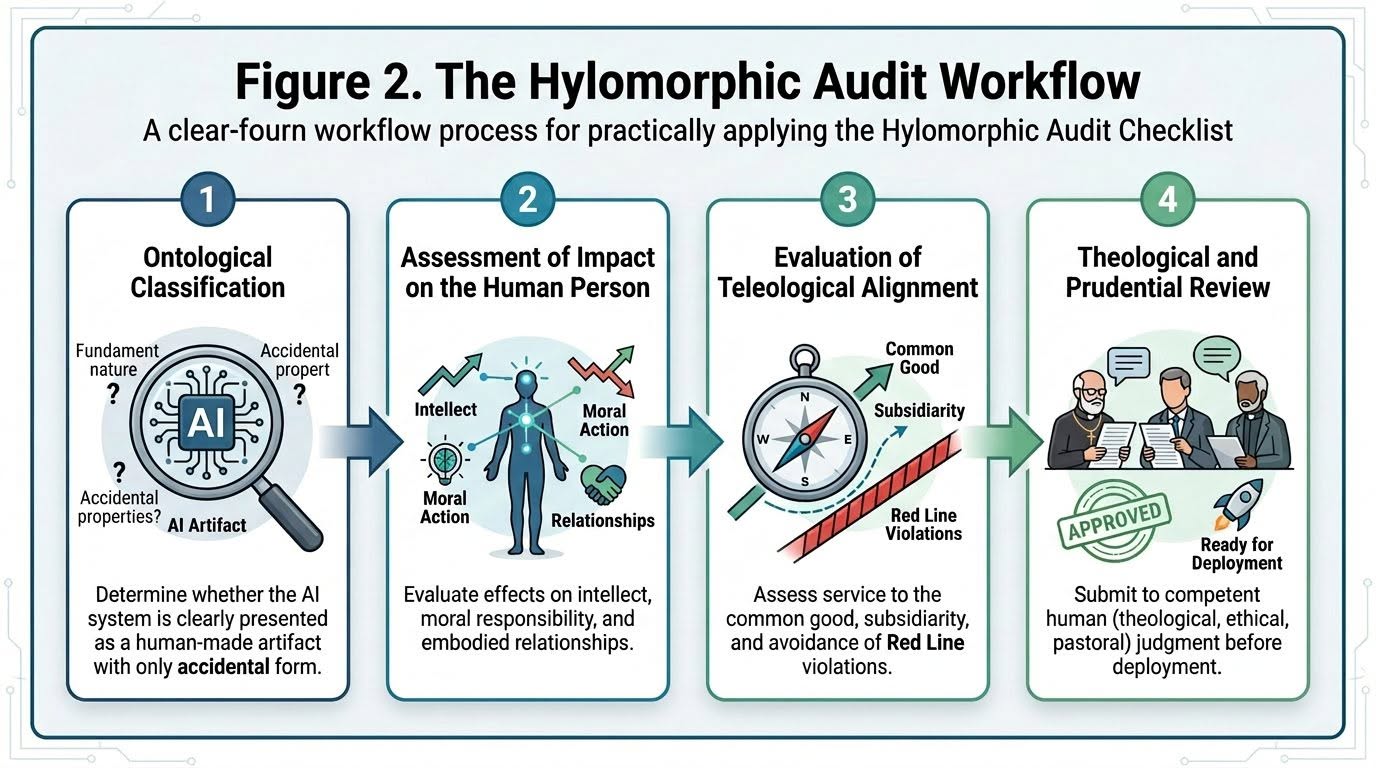
Figure 2: Audit workflow
From classification and evidence → scoring → Red Line review → discernment for pilot or institutional use.
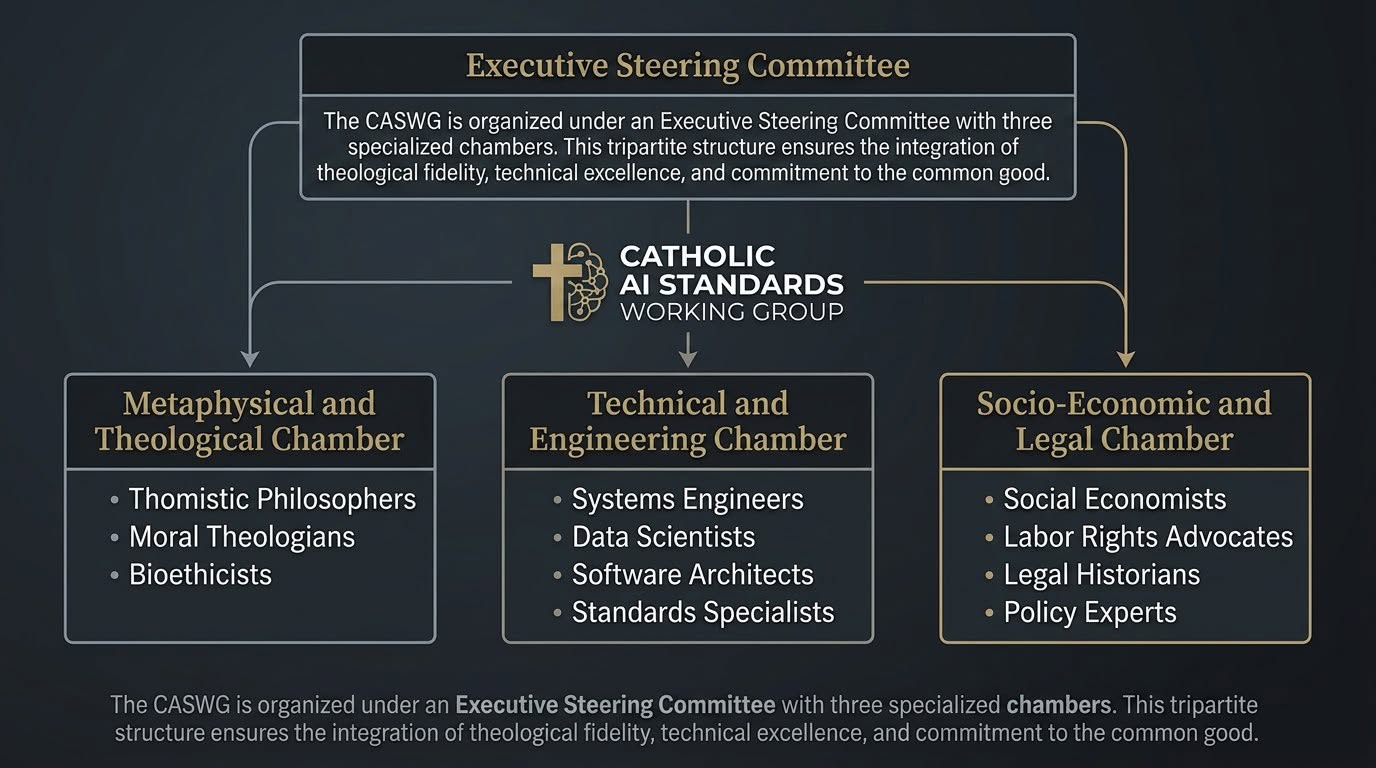
Figure 3 CASWG review structure (proposed)
Theological, technical, and social–legal perspectives work together so that criteria serve human dignity and the common good.