Marian Devotion
マリア崇敬
Marian Devotion: Our Lady and the Church in Japan
Marian devotion lies at the heart of authentic Catholic life. It is not a separate piety, but a path that leads more deeply to Jesus Christ. Through total consecration to the Immaculate Heart of Mary, the faithful entrust themselves completely to the Mother of God so that she may form them more perfectly in the likeness of her Son. This page presents the living Marian apostolate of our ministry in Japan — rooted in the spirituality of St. Maximilian Kolbe, St. Louis de Montfort, and the long history of Our Lady’s presence among the Japanese people.
A Brief History of Our Lady in Japan
The story of Marian devotion in Japan begins with the arrival of St. Francis Xavier on the Feast of the Assumption, 15 August 1549. From the earliest days of the mission, the Blessed Virgin held a central place in the preaching and prayer of the Church. The missionaries taught the Japanese faithful to love Mary as Mother of God and Mother of the Church, and devotion to her quickly took root.
When the great persecution began in the early seventeenth century, public practice of the Catholic faith was forbidden. For more than 250 years the Church in Japan was forced underground. The Kakure Kirishitan — the Hidden Christians — preserved the faith in secret, often at the cost of their lives. In the absence of priests and public worship, their devotion to Mary became a vital source of strength. They handed down prayers, teachings, and a deep love for the Mother of God from generation to generation.
During these long years of persecution, the Hidden Christians developed a remarkable form of hidden devotion known today as Maria Kannon. Kannon (観音), the Buddhist Bodhisattva of Mercy, was widely venerated in Japan, especially in the form of Koyasu Kannon — the “Child-giving Kannon” — often depicted holding a child. Because these statues already showed a compassionate mother figure with a child, the Hidden Christians began to reinterpret them as images of the Virgin Mary holding the Child Jesus. In some cases they slightly modified existing Kannon statues; in others they simply prayed before them with a Christian intention while outwardly appearing to practise Buddhism.
These statues became known as Maria Kannon (マリア観音). They allowed the Hidden Christians to continue their devotion to the Mother of God in secret. The practice was especially strong in the regions of Nagasaki, Hirado, the Gotō Islands, and other areas where the underground Christian communities survived. For generations, families passed down both the statues and the oral tradition that these images represented “Santa Maria.”
Maria Kannon statues are significant for several reasons. They demonstrate the extraordinary ingenuity and perseverance of the Hidden Christians in preserving Marian devotion under extreme pressure. They show how the Japanese faithful adapted local cultural forms in order to keep the Catholic faith alive. And they stand as tangible evidence of the deep love the Kakure Kirishitan retained for the Blessed Virgin throughout more than 250 years of isolation from the wider Church.
A decisive moment in this hidden history occurred on 17 March 1865 at the newly built Ōura Church in Nagasaki. A group of Hidden Christians approached the French missionary Father Bernard Petitjean and asked, “Where is the statue of Santa Maria?” Their question revealed that, after more than two centuries of isolation, they had kept alive the memory of the Mother of God. This event is remembered as the discovery of the Hidden Christians and is closely associated with the title Our Lady of the Discovery of the Hidden Christians of Japan. After the eventual lifting of the ban on Christianity, many Maria Kannon statues came to light and are now preserved as precious witnesses of Japan’s unique Christian history.
In the modern era, Marian devotion in Japan has continued to deepen. In 1930, St. Maximilian Kolbe arrived in Nagasaki and established the Mugenzai no Sono — the Garden of the Immaculate — from which he spread devotion to the Immaculate Conception and the Miraculous Medal. Later, the messages of Our Lady of Akita (beginning in 1973) called the faithful to prayer, penance, and reparation, confirming Mary’s maternal concern for Japan and for the world. Today, titles such as Our Lady of Japan, Our Lady of Akita, and Our Lady of the Discovery of the Hidden Christians continue to nourish the faith of Japanese Catholics and those who serve the Church in this land.
Overview of the Marian Apostolate Presented on This Page
This page gathers the principal expressions of our Marian ministry in Japan. Each section reflects a concrete way in which devotion to the Immaculate is lived and shared.
33 Days Consecration to the Immaculate
At the centre of our apostolate is the invitation to Total Consecration to Jesus through Mary. Following the method of St. Louis de Montfort and the Kolbean spirituality of St. Maximilian Kolbe, the 33-day preparation leads to a formal act of entrustment. Individuals and groups are regularly invited to make or renew this consecration, so that Mary may lead them more perfectly to her Son.
Mission of the Immaculate Mediatrix (MIM)
We serve as a contact and representative in Japan of the Mission of the Immaculate Mediatrix, the lay association of the Franciscan Friars of the Immaculate. Rooted in the spirituality of St. Maximilian Kolbe, this mission promotes total consecration to the Immaculate and works for the conversion of souls under her maternal care.
Our Lady of Japan This section presents the unique presence of the Blessed Virgin in Japanese Catholic history — from the Hidden Christians and the discovery at Ōura, to Our Lady of Akita and the quiet witness of Maria Kannon. It invites visitors to recognise Mary’s ongoing intercession for the conversion of Japan and the strengthening of the Church.
Seibo Maria Mission of Japan
Inspired by St. Maximilian Kolbe, the Seibo Maria Mission seeks to evangelise through the maternal mediation of the Immaculate, especially by the distribution of the Miraculous Medal. Under the patronage of the Immaculata, St. Francis Xavier, and St. Maximilian Kolbe, this apostolate works to bring souls closer to Jesus through Mary.
Marian Conference Japan
The annual Marian Conference Japan gathers the faithful to deepen devotion to the Immaculate Heart of Mary and to be equipped for the New Evangelisation. Through talks, prayer, and fellowship, participants are invited to grow in love for Jesus through Mary and to carry this devotion into daily life and mission.
Marian Dogmas
The four defined Marian dogmas — Divine Motherhood, Perpetual Virginity, Immaculate Conception, and the Assumption — form the doctrinal foundation of authentic Marian devotion. These truths reveal Mary’s unique role in the plan of salvation and invite the faithful to deeper trust in her maternal intercession.
33 Days Consecration to the Immaculate
汚れなきみ心への33日間の奉献
Total Consecration to Jesus through Mary is a powerful spiritual path of belonging completely to Christ by entrusting ourselves to His Mother. Following the method of St. Louis de Montfort and the Kolbean spirituality of St. Maximilian Kolbe, the 33-day preparation leads to a formal act of consecration.
We regularly invite individuals and groups to make or renew this consecration. Whether you are beginning for the first time or renewing your total gift of self, you are warmly invited to walk this path of love and trust.
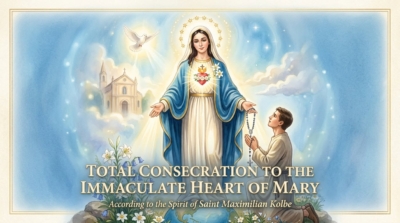
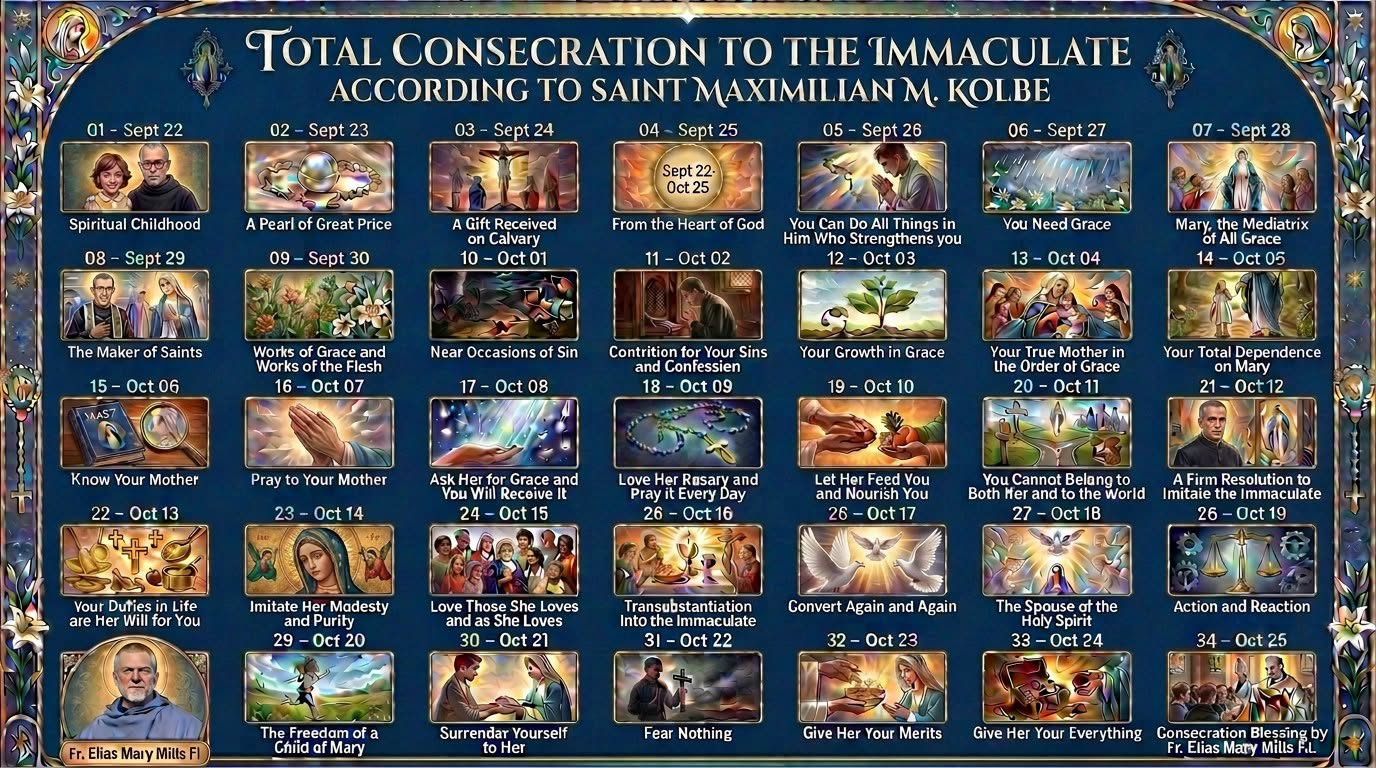
33 Days Consecration to the Immaculate Sept 22 – Oct 25 2026
Mission of the Immaculate Mediatrix (MIM)
汚れなき仲介者の使命(MIM)
The Mission of the Immaculate Mediatrix is the lay association of the Franciscan Friars of the Immaculate. Rooted in the spirituality of St. Maximilian Kolbe, its members seek to live total consecration to the Immaculate and to work for the conversion of souls under her maternal care.
In Japan, we serve as a contact and representative of this mission, promoting Marian consecration, the Miraculous Medal, and a deep love for Our Lady as Mediatrix of all graces.
Marian Conference Japan
マリア会議日本
Marian Conference Japan is an annual gathering dedicated to deepening devotion to the Immaculate Heart of Mary and equipping the faithful for the New Evangelization. Through talks, prayer, and fellowship, participants are invited to grow in love for Jesus through Mary and to bring this devotion into daily life and mission in Japan.
We have completed the 4th edition of the conference and continue to develop this important work of formation and evangelization.
Our Lady of Japan
日本の聖母
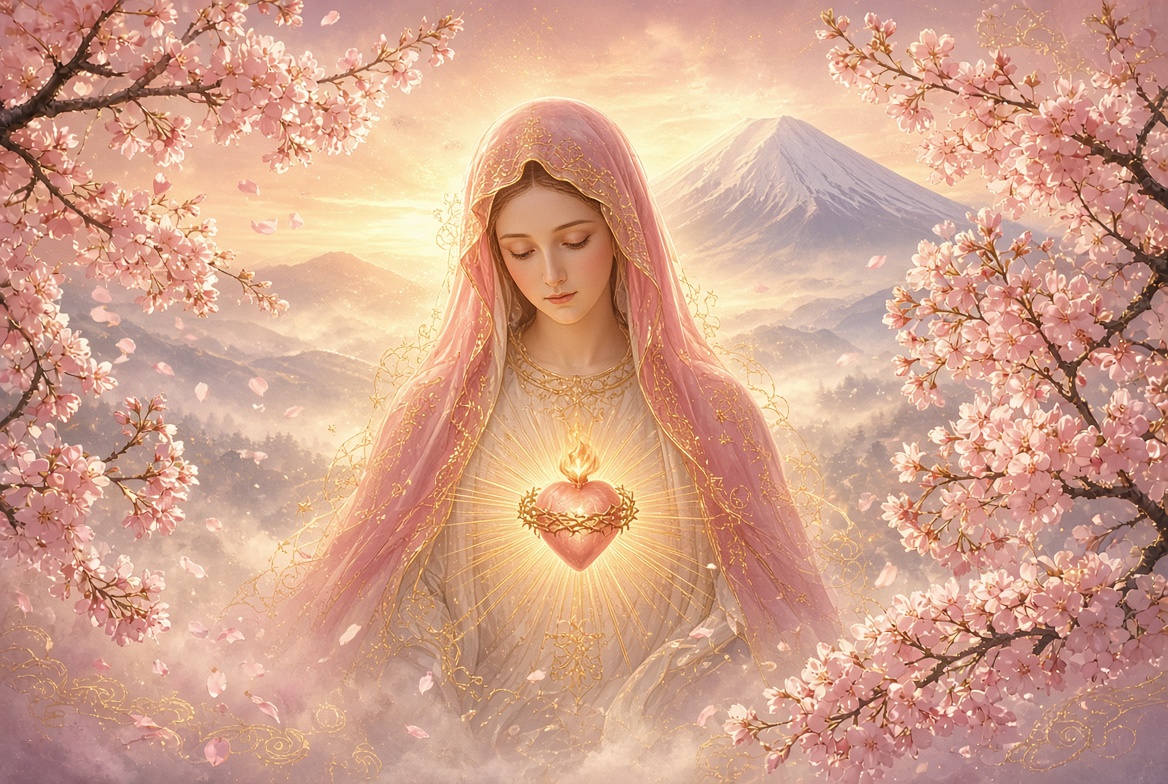
Our Lady has a unique and tender presence in the history of the Catholic Church in Japan. From the discovery of the Hidden Christians at Ōura Cathedral in 1865, to the messages of Our Lady of Akita, and the quiet faith expressed through Maria Kannon statues, Mary has accompanied the Japanese people through persecution, suffering, and hope.
She continues to intercede for the conversion of Japan and the strengthening of the Church in this land.
Seibo Maria Mission of Japan
聖母マリア・ミッション・オブ・ジャパン
Inspired by St. Maximilian Kolbe, the Seibo Maria Mission of Japan seeks to evangelize through the maternal mediation of the Immaculate Virgin Mary, especially by the distribution of the Miraculous Medal. Under the patronage of the Immaculata, St. Francis Xavier, and St. Maximilian Kolbe, this apostolate works to bring souls closer to Jesus through Mary in the Land of the Rising Sun.
Marian Dogmas
マリアの教義
The Catholic Church has solemnly defined four Marian dogmas:
- Divine Motherhood – Mary is truly the Mother of God (Theotokos).
- Perpetual Virginity – Mary was a virgin before, during, and after the birth of Jesus.
- Immaculate Conception – Mary was preserved from original sin from the first moment of her conception.
- Assumption – At the end of her earthly life, Mary was taken body and soul into heavenly glory.
These truths reveal Mary’s unique role in God’s plan of salvation and invite us to deeper love and trust in her maternal intercession.